
Interventional Pain Management for Beaverton, OR: Care Built Around Your Diagnosis
- Home
- Interventional Pain Management for Beaverton, OR: Care Built Around Your Diagnosis
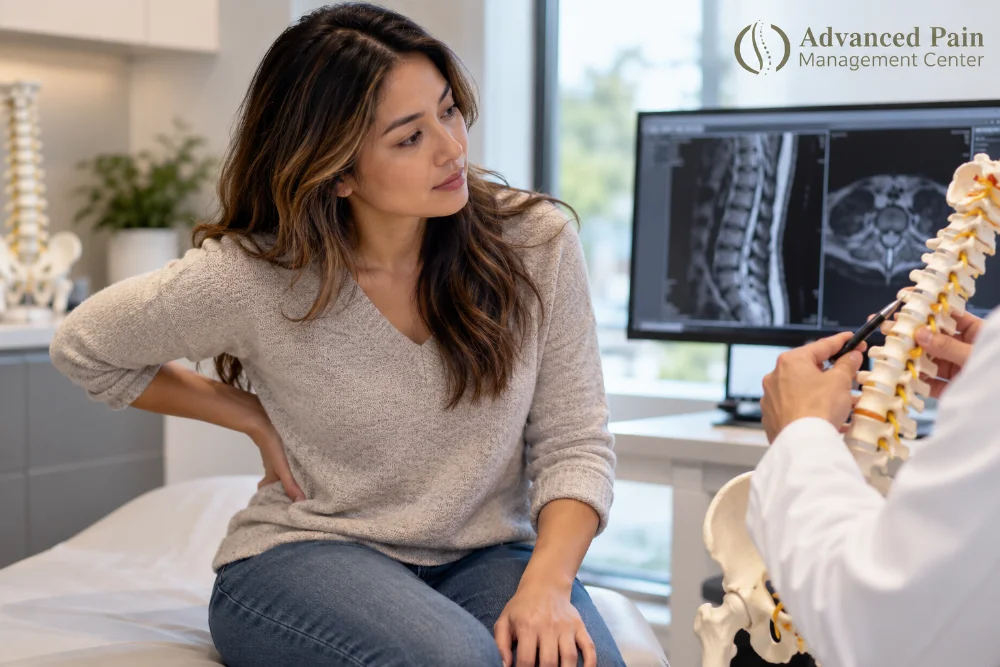
Advanced Pain Management Center serves Beaverton, OR patients through its clinic at 10305 SW Park Way, Suite 300, in Portland. The team evaluates persistent back, neck, joint, knee, and nerve-related pain and may consider targeted options such as Regenexx procedures, minimally invasive spinal decompression, image-guided injections, or nerve-directed treatment when the diagnosis supports them.
Vladimir Fiks, MD, is a pain management specialist and Regenexx physician who works alongside Dmitriy Shore, PA-C, and Alberto Rodriguez, PA-C, MS. APMC follows a diagnosis-led approach: the team looks for the likely source of the pain first, then discusses interventional, regenerative, conservative, or referral options based on the findings and the individual patient. There is no APMC office in Beaverton; care is delivered at the Portland clinic.
Contact Us About Interventional Pain Management Near Beaverton | Call (503) 295-0730
Persistent Pain Can Have More Than One Possible Source
Back, neck, joint, knee, and nerve-related symptoms can feel similar even when they come from different structures. Before an intervention is chosen, the key question is what is actually driving the pain and whether there is a specific target that can be treated. Similar symptoms may come from a spinal joint, a compressed nerve, a worn joint, an injured tendon, or a vertebral source, and those causes can lead to different treatment paths.
APMC works to answer that question before recommending an intervention. Depending on what the evaluation finds, a patient may be a candidate for a regenerative option, an image-guided injection, a nerve procedure, spinal decompression, or neuromodulation. Others may need further testing, more conservative care, or a referral before an interventional procedure is appropriate. Building the plan around the diagnosis is the point of an interventional approach.
What Interventional Pain Management Means at APMC
Interventional pain management focuses on identifying a likely pain generator and considering targeted, minimally invasive treatments when they fit the diagnosis, rather than relying on the same medication plan for every chronic pain condition. Depending on the findings, that may involve image-guided injections, nerve procedures, regenerative treatment, decompression, or neuromodulation. Medication can still be part of care for selected patients, but it is used thoughtfully rather than as the default long-term answer.
APMC does not provide physical therapy or behavioral health services in house. When those services would help, the team coordinates referrals to outside health-care partners. Referral requirements can also vary by insurance plan, so Beaverton patients can confirm what their plan needs with the office before a visit.
When Regenexx May Be an Option for Beaverton Joint or Spine Pain
Regenexx is APMC’s image-guided orthobiologic platform, which uses a patient’s own bone marrow concentrate or platelet-based preparations placed with imaging guidance to support the body’s natural healing for selected musculoskeletal conditions. Dr. Fiks is a Regenexx physician, and these procedures may be considered for certain cases of knee or joint osteoarthritis, tendon or ligament injuries, and selected spine-related musculoskeletal conditions after evaluation.
Whether Regenexx is appropriate depends on the diagnosis, structural findings, symptoms, imaging when relevant, previous treatment, and a patient’s goals. Regenexx is not appropriate for every condition, and it does not guarantee that surgery or joint replacement can be avoided. For Beaverton patients weighing their choices, it may be considered alongside injections, rehabilitation, or surgery depending on the condition. Learn more about Regenexx regenerative treatment and candidacy.
Minimally Invasive Spinal Decompression When Nerve Compression Is the Problem
Lumbar spinal stenosis and other clinically supported nerve compression can cause lower back pain, radiating leg pain or sciatica, numbness, weakness, heaviness, or reduced walking tolerance, and symptoms often ease when a person leans forward or sits. Decompression becomes a discussion only after APMC reviews the symptoms together with the physical exam, prior care, and imaging, because these complaints can overlap with other conditions.
When decompression is appropriate, APMC currently offers minimally invasive approaches, including the MILD procedure and endoscopic less-invasive decompression (ELID), with the exact technique depending on the anatomy and the pain generator. Interspinous and other minimally invasive stabilization may be considered when clinical findings and imaging show symptomatic instability. Not every person with stenosis can avoid open surgery, and some patients may still need a surgical referral, further evaluation, or a different pathway. You can read more on the minimally invasive spinal decompression page.
Knee and Joint Pain Options to Weigh Before Surgery
For knee and joint pain, APMC considers the diagnosis, imaging, the degree of joint or soft-tissue damage, symptoms, and treatment goals before recommending a path. Depending on those factors, options may include image-guided joint treatment, Regenexx regenerative procedures for appropriate candidates, or nerve-directed treatment when an identifiable nerve is contributing to the pain. Peripheral nerve stimulation may also be considered for selected persistent knee pain, including pain that continues after a knee replacement, when the involved nerve can be identified. These options may help reduce pain and support function, and they do not guarantee that surgery can be avoided.
Other Spine and Nerve Pain Treatments APMC May Consider
Decompression is only one part of spine and nerve care. When the diagnosis points elsewhere, APMC may consider other targeted options matched to the structure that appears to be generating the pain. For radiating nerve-related pain or sciatica, epidural steroid injections may be considered. Learn more about APMC’s spine pain treatment options.
- Facet and medial branch procedures: for pain that appears to arise from the spinal joints, sometimes followed by radiofrequency ablation
- Radiofrequency ablation: to interrupt pain signals from a targeted nerve when a diagnostic response supports it
- Spinal cord stimulation: considered for selected chronic nerve-related pain when other treatments have not helped enough. Learn more about spinal cord stimulation.
- Peripheral nerve stimulation: for selected nerve-related pain when a specific peripheral nerve can be identified
- Spinal infusion and other targeted options: for selected refractory pain, when clinically appropriate
Peripheral neuropathy is also evaluated and treated through APMC. Learn more about peripheral neuropathy treatment and how care is selected based on the underlying nerve problem.
Other Interventional Pain Procedures Available at APMC's Portland Clinic
APMC may also consider sacroiliac joint injections or fusion, basivertebral nerve ablation for selected vertebrogenic low back pain, kyphoplasty for appropriate vertebral fractures, spinal infusion therapy for selected refractory pain, and ketamine infusion or MLS laser therapy when clinically appropriate. These treatments address different conditions and are not interchangeable, so the evaluation determines whether any of them fit the patient’s findings.
When an Interventional Pain Evaluation May Be Appropriate
An interventional pain evaluation may be appropriate when persistent back, neck, joint, knee, or nerve-related symptoms have not improved enough with earlier care or when the clinical picture suggests a specific pain source that may respond to targeted treatment. The purpose of the evaluation is to determine whether an intervention fits the findings, not to assume that every patient needs a procedure.
Persistent Back, Neck, Joint, or Nerve Pain After Initial Care
Patients with ongoing back or neck pain, sciatica, joint or knee pain, or nerve-related symptoms may benefit from an evaluation when the pain keeps interfering with daily function or has not improved enough with earlier care. An evaluation does not automatically mean a procedure will be recommended.
An Identifiable Pain Source That May Respond to Targeted Treatment
Interventional treatment is most relevant when the evaluation points to a structure that can reasonably be addressed with a targeted approach, such as a spinal joint, a compressed or irritated nerve, a worn joint, injured soft tissue, or a vertebral source. Matching the treatment to that source is the goal.
When a Referral or More Conservative Care Comes First
Some patients may need additional diagnostic testing, continued conservative care, or evaluation by another specialist before an interventional procedure is appropriate. The plan should reflect what the evaluation supports rather than a predetermined procedure, and APMC can coordinate referrals when they are the better next step.
What APMC Reviews During a Pain Evaluation
1. Symptoms and prior care.
The provider reviews where symptoms occur, when they began, how they affect daily function, and what treatments have already been tried.
2. Records and imaging.
Relevant MRI or X-ray reports, prior treatment notes, and a current medication list can help the team understand the condition. The office can advise which records are useful to bring.
3. Physical examination and clinical correlation.
The examination is considered alongside imaging or other testing when those findings are relevant. APMC does not choose a procedure from symptoms alone when more information is needed to identify the pain source.
4. Next-step discussion.
If the findings support an interventional option, the provider explains why it may fit and what alternatives should be considered. Some patients may need additional testing, continued conservative care, or referral instead. When physical therapy or behavioral health support is appropriate, APMC coordinates referrals to outside partners because those services are not provided in house. Referral requirements can vary by insurance plan, so patients can confirm plan rules with the office.
After a Treatment Is Chosen: Preparation and Recovery Expectations
Because APMC offers several different interventional and regenerative treatments, preparation, sedation, follow-up, and activity guidance are not the same for every procedure. What comes next depends on the treatment that is chosen.
How the Team Prepares You for a Procedure
For selected minimally invasive treatments, APMC may use local anesthetic with light IV or oral sedation rather than automatically requiring general anesthesia, with the plan depending on the procedure and the patient’s medical needs. The clinical team provides treatment-specific preparation instructions once the procedure is selected.
Why Recovery Timelines Differ From One Treatment to the Next
There is no single recovery timeline across an injection, a Regenexx procedure, nerve stimulation, decompression, or a stabilization procedure. Temporary effects, activity guidance, follow-up needs, and treatment response vary by the intervention and the individual. APMC reviews these expectations before treatment so patients understand the next steps and any limitations, and results vary from person to person.
What Pain Management Services Does APMC Offer Beaverton Patients?
APMC’s Portland clinic offers interventional and regenerative pain care for Beaverton patients, supported by established provider experience and multilingual care:
- A Regenexx physician on staff: Vladimir Fiks, MD, evaluates selected musculoskeletal conditions for image-guided bone marrow concentrate and platelet-based procedures
- Minimally invasive decompression options: APMC evaluates selected patients for approaches including MILD and ELID, with stabilization considered when clinically supported
- Image-guided interventional care: available treatment may include epidural injections, medial branch procedures, radiofrequency ablation, and neuromodulation according to the diagnosis
- An established Portland practice: Advanced Pain Management Center has treated patients since 2000
- Multilingual care: Dr. Fiks speaks English, Spanish, and Russian
Who Provides Pain Management Care for Beaverton Patients at APMC?
Beaverton patients may be evaluated and followed by Vladimir Fiks, MD, Dmitriy Shore, PA-C, and Alberto Rodriguez, PA-C, MS. Their roles include assessment, treatment planning, and follow-up within APMC’s pain management practice. Procedure-specific care depends on the treatment selected. Dr. Fiks is a Regenexx physician.
Vladimir Fiks, MD, Interventional Pain and Regenexx Physician
Vladimir Fiks, MD, graduated from Saratov University in Saratov, Russia, and completed an internship at Jefferson Frankford Hospital in Philadelphia. He finished both an anesthesiology residency and a pain management fellowship at Oregon Health & Science University in Portland. He is a Regenexx physician whose clinical work includes image-guided procedures, spinal cord stimulation, minimally invasive spinal decompression, and selected stabilization procedures. He uses an integrative approach that pairs interventional care with referrals to outside physical therapy and behavioral health partners when appropriate, and he speaks English, Spanish, and Russian.
Dmitriy Shore, PA-C, Pain Management Physician Assistant
Dmitriy Shore, PA-C, is a physician assistant nationally board certified by the National Commission on Certification of Physician Assistants. He graduated from Oregon Health and Science University in 2000 and has focused his career on chronic pain management. He is known for compassionate, patient-focused care and pursues continuing education and current pain-management literature while working with patients on evaluation, treatment planning, and follow-up.
Alberto Rodriguez, PA-C, MS, Pain Management Physician Associate
Alberto Rodriguez earned his Bachelor of Science at Central Washington University, took part in the University of Washington’s Minority Medical Education Program, and completed his Master of Science and Physician Assistant studies at Pacific University in Forest Grove, Oregon in 2008. Over the past 18 years he has cared for patients across orthopedics, urgent care, family medicine, and pain management. He believes strong care begins with listening, and he takes time to explain conditions and options so patients can make informed decisions.
Patient Experiences With Advanced Pain Management Center
These reviews reflect individual patient experiences with Advanced Pain Management Center. They are not specific to interventional pain management for Beaverton and do not guarantee the same experience, diagnosis, treatment, or medical outcome for every patient. Care needs and experiences vary by individual.
“I have been coming to APMC for about 7 years now. I see Mr. Shore and have been extremely happy with him. Everyone in the office is very kind and helpful. I would definitely recommend this clinic.”
“Dr. Fiks is a caring professional. I truly think that he has the best intentions for his patients. His staff is very friendly and kind.”
“Treated me like I mattered. They told me their procedures, what to expect from beginning to recovery. I would give them a 10 for above and beyond.”
Visiting APMC's Portland Clinic From Beaverton
Advanced Pain Management Center does not have an office in Beaverton. Beaverton patients receive care through the clinic at 10305 SW Park Way, Suite 300, Portland, OR 97225. Because arrival conditions vary, patients can contact the office before a visit for current location and arrival information.
Which Parts of Beaverton Does APMC Serve?
APMC serves patients from Central Beaverton, Vose, Greenway, Sexton Mountain, Raleigh West, and nearby Washington County communities through its Portland clinic.
Recognizable places within Beaverton include Beaverton City Library and City Park downtown, Tualatin Hills Nature Park, and Beaverton Transit Center.
How Can Beaverton Patients Contact APMC's Portland Clinic?
Beaverton patients can request an evaluation by calling Advanced Pain Management Center at (503) 295-0730 or using the Contact Us page. The office can confirm appointment details and current arrival information for the SW Park Way clinic.
- Address: 10305 SW Park Way Ste 300, Portland, OR 97225
- Website: https://apmconline.org/
- Hours: Monday to Friday, 8:00 AM to 5:00 PM. Closed Saturday and Sunday.
Call (503) 295-0730 | Contact Us About Interventional Pain Management Near Beaverton
Advanced Pain Management Center 10305 SW Park Way Ste 300, Portland, OR 97225
Beaverton Patient Questions About Regenexx, Decompression, and Interventional Care
What factors help APMC decide between Regenexx and an injection for musculoskeletal pain?
The choice depends on the diagnosed pain source, the tissue or structure involved, examination findings, imaging when relevant, prior treatment, and the patient’s goals. Regenexx and image-guided injections are used for different clinical situations, so APMC weighs which option, if either, best matches the findings rather than treating them as interchangeable.
Can Regenexx be considered for both joint problems and selected spine-related musculoskeletal conditions?
Yes. Regenexx bone marrow concentrate and platelet-based procedures may be considered for certain joint and tendon conditions and for selected spine-related musculoskeletal diagnoses after evaluation. Candidacy depends on the diagnosis, structural findings, imaging, symptoms, and goals, and Regenexx is not appropriate for every condition. Dr. Fiks reviews whether it is a reasonable option for a given patient.
Does APMC require new imaging before deciding whether Regenexx may fit?
Not every patient needs the same imaging. Existing MRI or X-ray reports can help the provider understand the structure involved, and APMC reviews them alongside symptoms, examination findings, and prior treatment. The office can advise whether additional imaging is needed for the condition being evaluated.
Does spinal stenosis on an MRI automatically mean decompression is needed?
No. Imaging is considered together with symptoms, examination findings, functional limitations, and prior treatment. Decompression is discussed only when the overall clinical picture supports nerve compression that may benefit from relieving pressure, and some patients may need another treatment path or referral instead.
How does APMC decide between MILD, ELID, or another decompression approach?
The choice depends on the anatomy and the structures causing the compression, which the team assesses with the exam, imaging, and prior treatment response. MILD and ELID are minimally invasive approaches used for different situations, and stabilization may be added when instability is present. There is no single technique that fits every patient, so the plan follows the findings.
When might spinal stabilization be considered along with decompression?
Stabilization such as an SI, facet, interspinous, or lumbar fusion may be considered when imaging and clinical findings show symptomatic instability in addition to nerve compression. In those cases, relieving pressure alone may not be enough, so the team evaluates whether stabilizing the segment is appropriate. This is decided case by case, not applied to every decompression.
When are epidural steroid injections considered for sciatica or radiating nerve pain instead of decompression?
Epidural steroid injections may be considered when radiating nerve pain or sciatica appears driven by inflammation around a nerve root and the situation does not yet call for decompression. They can be part of a step-wise plan, and the response can also provide useful diagnostic information. Whether an injection or decompression fits better depends on the imaging, symptoms, and how the pain has responded to earlier care.
How are radiofrequency ablation and spinal decompression different in the types of pain they target?
Radiofrequency ablation interrupts pain signals from a specific nerve, most often for pain arising from the spinal joints, while decompression physically relieves pressure on compressed nerves, usually in stenosis. They address different pain sources, so they are not interchangeable. The evaluation determines which mechanism matches the diagnosed pain generator.
When is spinal cord stimulation considered after other chronic pain treatments have not helped enough?
Spinal cord stimulation may be considered for selected chronic nerve-related pain when injections, medication, or other treatments have not provided adequate relief and the pain pattern fits. It typically begins with a trial before any decision about a longer-term device. Candidacy depends on the diagnosis and a careful review of prior care.
How is peripheral nerve stimulation different from spinal cord stimulation for selected nerve-related pain?
Peripheral nerve stimulation targets a specific peripheral nerve outside the spinal cord, while spinal cord stimulation delivers pulses within the epidural space of the spinal canal. Peripheral nerve stimulation may be considered when a single identifiable nerve is contributing to the pain, including selected persistent pain after a knee replacement. The right option depends on where the pain signal originates.
Does Advanced Pain Management Center have an office in Beaverton, OR?
No. Advanced Pain Management Center is located in Portland at 10305 SW Park Way, Suite 300, and does not have a separate Beaverton office. It serves people seeking interventional pain care from Beaverton and the surrounding Washington County area through that Portland clinic.
Where do Beaverton patients receive Regenexx procedures through APMC?
Beaverton patients receive Regenexx evaluations and procedures through APMC’s SW Park Way clinic in Portland, with Dr. Fiks serving as the Regenexx physician. Whether Regenexx is appropriate is determined during an evaluation based on the diagnosis, structural findings, and treatment goals.
How can Beaverton patients confirm where a spinal decompression procedure will take place?
APMC serves Beaverton through its SW Park Way clinic in Portland. Once a decompression approach is selected, the office can confirm the procedure location, arrival instructions, and treatment-specific preparation. APMC does not have a separate Beaverton office.
What should Beaverton patients bring to a first APMC evaluation?
Bring a photo ID, insurance information when applicable, a current medication list, and any relevant MRI or X-ray reports or prior treatment notes you already have. The office can advise which records are most useful for the condition being evaluated.
Where is follow-up coordinated for Beaverton patients after treatment?
Follow-up is coordinated through APMC’s Portland practice, with timing and visit location based on the treatment performed. The clinical team explains when the next visit should occur and any treatment-specific follow-up instructions.
APMC Treatment Pages and Trusted Medical Resources
Beaverton patients can review APMC treatment and provider information along with independent medical resources on spinal stenosis and peripheral neuropathy.
APMC Treatment and Provider Information
Medical Resources for Spinal Stenosis and Peripheral Neuropathy
Talk With APMC About Pain Care Options From Beaverton
Advanced Pain Management Center serves Beaverton patients from its SW Park Way clinic in Portland. If you want to understand what may be driving persistent back, neck, joint, knee, or nerve-related pain and whether a targeted interventional option fits the diagnosis, contact the practice to request an evaluation.
Request an Evaluation at APMC’s Portland Clinic
Contact Us About Interventional Pain Management Near Beaverton | Call (503) 295-0730
Advanced Pain Management Center 10305 SW Park Way Ste 300, Portland, OR 97225
Hours:
- Monday to Friday: 8:00 AM to 5:00 PM
- Saturday and Sunday: Closed