Spinal Stenosis Treatment with Spinal Decompression
- Home
- Spinal Stenosis Treatment with Spinal Decompression
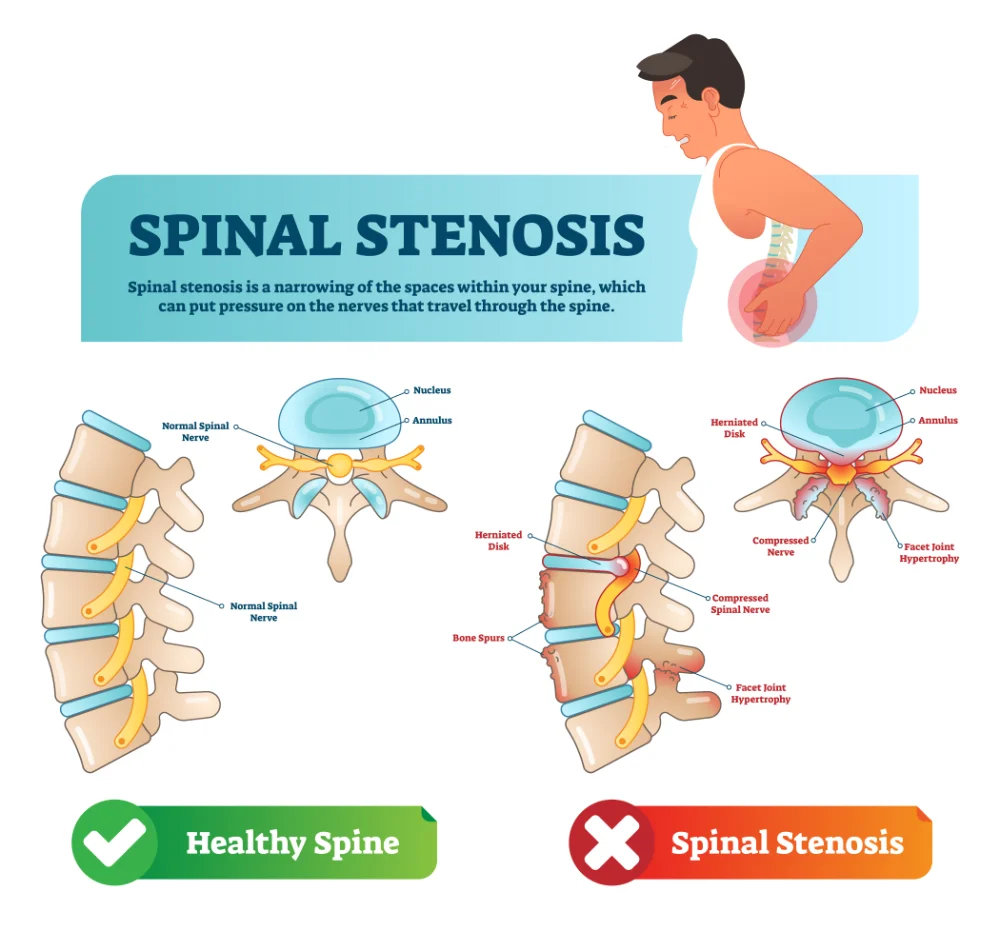
Spinal stenosis is one of the most common causes of chronic back pain, leg pain, and mobility problems, particularly among older adults. As the spine changes over time, the spaces surrounding the spinal cord and nerve roots can gradually become narrower. This narrowing places pressure on nearby nerves, leading to symptoms that may interfere with work, exercise, walking, and everyday activities.
Many people assume that a diagnosis of spinal stenosis automatically means big, complex surgery. While surgery is appropriate for some patients, many others experience meaningful symptom improvement through conservative care. Depending on the cause and severity of the condition, spinal stenosis treatment may include physical therapy, medications, injections, activity modification, or minimally invasive procedures designed to relieve pressure on affected nerves.
For appropriate candidates, minimally invasive spinal decompression may be considered when structural narrowing is contributing to persistent nerve compression, and symptoms have not improved adequately with conservative treatment. Patients seeking spinal stenosis treatment with spinal decompression in Portland often want to know whether a minimally invasive approach may be appropriate before considering more extensive spine surgery.
At the Advanced Pain Management Center, physicians evaluate each patient individually to determine the source of pain and recommend a treatment plan based on symptoms, physical examination, and diagnostic imaging. The practice offers a wide range of conservative and minimally invasive treatments, including spinal decompression, interventional pain procedures, and Regenexx® regenerative medicine when appropriate.
What Is Spinal Stenosis?
Spinal stenosis refers to narrowing within the spinal canal or the openings where nerves leave the spine. The condition most commonly affects the lumbar spine in the lower back or the cervical spine in the neck. Less commonly, narrowing can occur in the thoracic spine.
Although the condition can develop after an injury or because of a congenital spinal abnormality, it most often develops gradually through age-related changes in the spine.
The narrowing may involve:
- The central spinal canal
- The openings where nerve roots exit the spine (foramina)
- Areas surrounding the spinal cord or spinal nerves
With lumbar spinal stenosis, symptoms may become more noticeable during standing or walking and improve with sitting or bending forward.
Also Read: Minimally Invasive Lumbar Stenosis Treatment Options
Common Symptoms of Spinal Stenosis
Spinal stenosis does not cause the same symptoms in every patient. Symptoms depend on where the narrowing occurs and which nerves are affected. Some individuals notice only mild discomfort, while others develop symptoms that gradually interfere with walking, standing, or daily activities.
Low Back Symptoms
Many patients with lumbar spinal stenosis initially notice discomfort across the lower back.
Common symptoms include:
- Aching pain
- Stiffness
- Difficulty standing upright for long periods
- Reduced flexibility
- Increased discomfort after prolonged activity
Many people also seek back pain treatment because symptoms gradually worsen over months or years.
Leg Symptoms
When nerves traveling into the legs become compressed, symptoms often extend beyond the lower back.
These may include:
- Sciatica
- Burning pain
- Numbness
- Tingling
- Muscle weakness
- Pain traveling into the buttocks, thighs, calves, or feet
Cervical Symptoms
Cervical spinal stenosis affects the neck and upper extremities.
Patients may develop:
- Neck pain
- Arm pain
- Hand numbness
- Hand weakness
- Difficulty with fine motor tasks
- Balance problems
Worsening balance, hand clumsiness, weakness, or other signs of spinal cord involvement warrant prompt medical evaluation.
Neurogenic Claudication and Lumbar Spinal Stenosis
One of the hallmark symptoms of lumbar spinal stenosis is neurogenic claudication.
Neurogenic claudication occurs when lumbar spinal stenosis affects the nerves supplying the lower body, with symptoms commonly triggered or worsened by standing and walking.
Patients commonly report:
- Pain after walking a short distance
- Heaviness in the legs
- Weakness while standing
- Improvement after sitting down
- Relief when bending forward
Many physicians refer to this improvement while leaning over a shopping cart as the shopping cart sign. Leaning forward temporarily increases the available space within portions of the spinal canal, which may reduce nerve pressure and improve walking tolerance.
Recognizing this pattern helps physicians distinguish spinal stenosis from circulation-related leg pain or other medical conditions.
What Causes Spinal Stenosis?
Spinal stenosis usually develops from a combination of changes that gradually reduce the space available for the spinal cord or nerve roots.
In most cases, several factors contribute to narrowing of the spinal canal over time.
Age-Related Degeneration
The most common cause is the normal aging process.
As spinal structures wear over many years, changes involving the discs, joints, and supporting ligaments gradually reduce available space for spinal nerves.
Other factors that can contribute to spinal narrowing include degenerative disc changes, arthritis and facet joint enlargement, thickened ligaments, bulging or herniated discs, previous injuries or surgery, and a naturally narrow spinal canal. Identifying which structures are contributing to symptoms helps guide treatment.
How Spinal Stenosis Is Diagnosed
Diagnosis typically includes a review of symptoms and medical history along with a physical and neurological examination. Your physician may evaluate strength, reflexes, sensation, walking ability, range of motion, and whether certain positions make symptoms better or worse.
Imaging may also be used to identify narrowing and other structural changes. MRI is commonly used to evaluate the spinal canal, discs, nerves, and surrounding soft tissues, while X-rays or CT scans may provide additional information about arthritis, alignment, or bony changes. Additional nerve testing may be considered when the source of symptoms remains unclear.
Why Imaging Alone Does Not Determine Treatment
One important point patients should understand is that imaging findings do not always match symptom severity.
Some people have significant narrowing visible on an MRI but experience very few symptoms. Others have moderate imaging findings yet develop considerable pain or walking limitations.

For this reason, physicians correlate imaging results with:
- Medical history
- Physical examination
- Neurological findings
- Functional limitations
- Patient-reported symptoms
At the Advanced Pain Management Center, treatment recommendations are based on the complete clinical picture rather than imaging findings alone. This patient-centered approach also helps identify when regenerative medicine treatments, including Regenexx®, may be considered alongside other conservative therapies when appropriate.
What Is Minimally Invasive Spinal Decompression?
Minimally invasive spinal decompression refers to a group of procedures used to create more space for compressed spinal nerves while limiting disruption to surrounding tissues. The specific approach depends on where the narrowing occurs, which structures are contributing to nerve compression, and the patient’s symptoms, neurological findings, and imaging.
Depending on the circumstances, minimally invasive decompression may include MILD (minimally invasive lumbar decompression), endoscopic less-invasive interlaminar decompression (ELID), tubular foraminotomy and/or discectomy, or an interspinous distraction and fusion procedure. These techniques address different sources or patterns of spinal narrowing, so they are not interchangeable or appropriate for every patient.
For selected patients, Advanced Pain Management Center may use an interspinous distraction and fusion system to increase space within the spinal canal and neural foramina. An interspinous implant is positioned at the affected spinal level to provide distraction and support fusion. APMC uses the StabLink® system from Southern Spine or the Inspan system from KIC Ventures for this type of procedure.
The procedure recommended depends on the patient’s anatomy, location and severity of stenosis, structures causing nerve compression, neurological findings, imaging results, previous treatment, and overall condition.
Results Vary Among Patients
Outcomes after minimally invasive decompression vary based on the cause and severity of the stenosis, the structures producing nerve compression, neurological findings, overall health, and other spinal conditions. A physician evaluation is necessary to determine whether decompression is appropriate and what results may reasonably be expected.
Also Read: Spinal Stenosis Procedures That May Help Relieve Nerve Compression
Who Is a Good Candidate for Spinal Decompression?
Minimally invasive spinal decompression may be considered for selected patients whose symptoms are linked to structural narrowing that is compressing or irritating spinal nerves. Candidacy depends on the cause and location of the stenosis, neurological findings, imaging results, symptom severity, previous treatment, and overall health.
When appropriate, minimally invasive spinal decompression may be incorporated into a broader treatment plan that includes rehabilitation or other pain management treatments.
Who May Not Be a Candidate?
Although minimally invasive spinal decompression may be appropriate for some patients, it is not the right treatment for everyone.
Your physician may recommend a different treatment approach if you have:
- Significant spinal instability
- Recent spinal fractures
- Advanced osteoporosis
- Active spinal or systemic infection
- Certain implanted spinal hardware
- Spinal tumors
- Progressive neurological deficits requiring urgent surgical evaluation
Patients experiencing sudden weakness, loss of bowel or bladder control, or rapidly worsening neurological symptoms require immediate medical evaluation to determine whether urgent surgical treatment is necessary.
A careful evaluation helps determine the safest and most appropriate approach for each individual.
What to Expect With Minimally Invasive Spinal Decompression
Treatment begins with a comprehensive evaluation to determine where spinal narrowing is occurring and which structures are contributing to nerve compression. The physician reviews symptoms, neurological findings, previous treatment, and imaging before determining whether minimally invasive decompression is appropriate.
Unlike traction-based spinal decompression, minimally invasive decompression is a physician-performed procedure intended to directly address the anatomical source of nerve compression. The exact technique, anesthesia, procedure time, and recovery depend on the type of decompression being performed and the patient’s condition.
Before treatment, patients receive specific instructions about preparation, recovery, activity restrictions, and follow-up care. The goal is to relieve pressure on affected nerves while using the least invasive approach appropriate for the patient’s spinal condition.
Spinal Decompression as Part of a Comprehensive Treatment Plan
Not every patient with spinal stenosis requires a decompression procedure. Depending on the source and severity of symptoms, treatment may begin with conservative or interventional options before minimally invasive decompression is considered.
Advanced Pain Management Center offers several conservative and minimally invasive services that may be combined based on each patient’s diagnosis.
Physical Rehabilitation
Exercise and rehabilitation help improve flexibility, strength, posture, and spinal support.
A rehabilitation program may focus on:
- Core strengthening
- Flexibility exercises
- Walking tolerance
- Balance training
- Functional movement
These exercises may help patients maintain improvements achieved during treatment.
Injection Therapies
For some patients, image-guided spinal injections may help reduce inflammation around irritated nerves.
Depending on the diagnosis, physicians may recommend procedures such as epidural steroid injections or other interventional pain management techniques.
Spinal Cord Stimulation
For some patients with chronic neuropathic pain that has not responded adequately to other treatments, spinal cord stimulation may be considered. This treatment uses mild electrical impulses to modify pain signaling within the nervous system. Spinal cord stimulation does not correct the structural narrowing caused by spinal stenosis, but it may be an option for selected patients whose persistent nerve-related pain requires a different approach.
Regenexx® Regenerative Medicine
Advanced Pain Management Center also offers Regenexx® regenerative medicine for selected musculoskeletal conditions when appropriate.
After a physician evaluation, regenerative treatments may be discussed as part of an individualized care plan based on the patient’s diagnosis and treatment history.
Lifestyle Modifications
Daily habits can influence spinal health and symptom management.
Your physician may recommend:
- Activity modification
- Smoking cessation
- Healthy sleep habits
- Stress management
- Improved posture
Exercise Therapy
Regular movement supports flexibility and muscle strength while helping maintain spinal mobility.
Exercise programs should be individualized based on symptoms and physician recommendations.
Weight Management
Maintaining a healthy body weight may reduce stress placed on the spine and supporting joints.
For some patients, even modest weight reduction may improve walking tolerance and decrease mechanical strain.
Ergonomic Improvements
Small changes at work and home may help reduce stress on the neck and lower back.
Examples include:
- Proper chair support
- Correct monitor height
- Safe lifting techniques
- Frequent movement breaks
- Supportive footwear when appropriate
Because symptoms and contributing factors vary among patients, treatment plans may incorporate more than one approach based on the individual’s diagnosis, functional limitations, and response to care.
When Is More Extensive Spine Surgery Necessary?
Many patients ask, What is the best treatment for spinal stenosis?
The answer depends on the severity of the condition, neurological findings, overall health, and how symptoms respond to conservative care.
For many individuals, symptoms may initially be managed with non-surgical treatments such as rehabilitation, medications, activity modification, or injections. When these approaches do not provide adequate relief and structural narrowing continues to compress the nerves, minimally invasive decompression may be considered for appropriate candidates.
However, more extensive spine surgery may still be necessary for some patients.
Situations that may require surgical evaluation include:
- Progressive neurological deficits
- Significant muscle weakness
- Loss of bowel or bladder control
- Severe spinal instability
- Marked functional decline
- Symptoms that continue despite appropriate conservative treatment
Some patients may require more extensive spine surgery when conservative care or less invasive procedures are not appropriate or do not adequately address the underlying structural problem.
When there are no urgent neurological concerns, conservative or less invasive treatments may be considered before more extensive spine surgery.
Also Read: Why Choose Spinal Decompression Therapy for Back Pai
Frequently Asked Questions
Can spinal stenosis heal without surgery?
Spinal stenosis itself usually does not reverse because it commonly results from structural changes in the spine. However, symptoms may improve with treatments such as rehabilitation, medications, activity modification, or injections. For selected patients with persistent nerve compression, minimally invasive decompression may also be considered.
Is minimally invasive spinal decompression the same as traction therapy?
No. Traction-based spinal decompression uses a mechanical table to stretch the spine. Minimally invasive decompression is a physician-performed procedure intended to address specific structures contributing to nerve compression.
How do I know if I need minimally invasive decompression for spinal stenosis?
A physician evaluates your symptoms, neurological findings, imaging, previous treatment, and the structures causing the stenosis to determine whether decompression may be appropriate.
How is minimally invasive spinal decompression different from traditional spine surgery?
At Advanced Pain Management Center, minimally invasive decompression may include MILD, endoscopic less-invasive interlaminar decompression (ELID), tubular foraminotomy and/or discectomy, or interspinous distraction and fusion depending on the structures causing nerve compression and the patient’s specific condition. More extensive spine surgery may involve broader decompression or stabilization. The appropriate approach depends on the patient’s anatomy, neurological findings, imaging, and overall spinal condition.
Can minimally invasive spinal decompression help avoid more extensive spine surgery?
For selected patients, minimally invasive decompression may provide an option before more extensive spine surgery is considered. However, it is not appropriate for every type or severity of spinal stenosis. Patients with significant instability, progressive neurological deficits, or other complex spinal conditions may still require a more extensive surgical approach.
Is minimally invasive spinal decompression covered by insurance?
Coverage varies by insurance plan, medical necessity requirements, and the specific procedure recommended. Patients should verify benefits before treatment. Advanced Pain Management Center can discuss coverage and financial questions before treatment begins.
Are injections sometimes used before minimally invasive spinal decompression?
Yes. Depending on the diagnosis and severity of symptoms, injections or other interventional treatments may be considered before a decompression procedure. Treatment sequencing depends on the source of symptoms and how the patient responds to previous care.
What if minimally invasive spinal decompression does not relieve my symptoms?
If symptoms continue, your physician will reassess your condition and discuss other treatment approaches that may include additional conservative therapies, interventional procedures, regenerative medicine when appropriate, or referral for surgical evaluation if medically indicated.
Why Choose Advanced Pain Management Center for Spinal Stenosis Treatment
Patients seeking spinal stenosis treatment with spinal decompression in Portland benefit from a thorough evaluation designed to identify the source of pain rather than focusing only on imaging findings.
Advanced Pain Management Center provides a wide range of spine care services, allowing physicians to develop treatment plans based on each patient’s diagnosis, symptoms, and functional needs.
The practice offers:
- Comprehensive evaluations
- Individualized treatment plans
- Advanced diagnostic capabilities
- A conservative-first approach whenever medically appropriate
- Minimally invasive spine procedures
- Minimally invasive spinal decompression for appropriate candidates
- Regenexx® regenerative medicine when appropriate
- Experienced pain management physicians
Rather than focusing only on symptom reduction, treatment plans emphasize improving function, mobility, and quality of life while helping patients return to daily activities with greater comfort.
Conclusion
Spinal stenosis develops when the spaces surrounding the spinal cord or spinal nerves gradually become narrower, placing pressure on nearby nerve structures. This narrowing may result from disc degeneration, arthritis, thickened ligaments, bone spurs, or other age-related changes that develop over time.
Although many people believe more extensive spine surgery is inevitable, that is not always the case. Conservative treatments may help manage symptoms for some patients, while others may be candidates for a minimally invasive decompression procedure.
Whether minimally invasive spinal decompression is appropriate, and which technique may be considered, depends on the structures causing the stenosis, symptom severity, neurological findings, imaging, previous treatment, and overall health. Options may include MILD, ELID, tubular decompression procedures, interspinous distraction and fusion, or another treatment approach based on the patient’s specific circumstances.
Seeking medical evaluation early may help identify treatment opportunities before symptoms become more severe or begin limiting your mobility.
Schedule a consultation with the Advanced Pain Management Center to determine whether minimally invasive spinal decompression or another personalized treatment option may be appropriate for managing your spinal stenosis symptoms and mobility concerns.