
When Spinal Cord Stimulation May Fit Spinal Stenosis Care in Portland
- Home
- When Spinal Cord Stimulation May Fit Spinal Stenosis Care in Portland
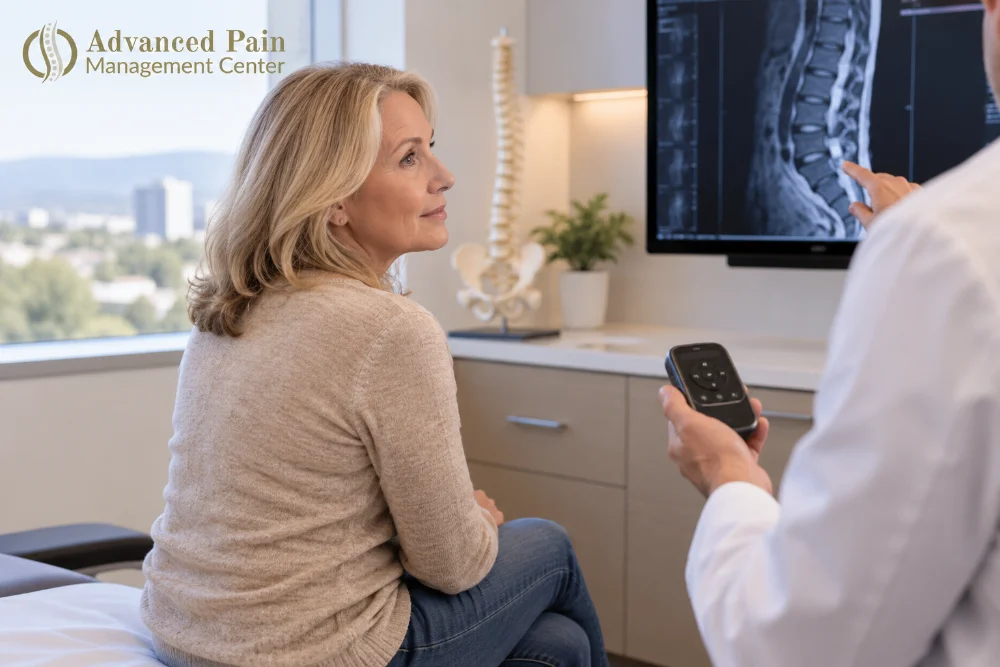
Can Spinal Cord Stimulation Help Spinal Stenosis Without Decompression Surgery?
Spinal cord stimulation (SCS) may be considered for selected patients with chronic nerve-related pain or neurogenic claudication from lumbar spinal stenosis, especially when other treatment has not provided enough relief and decompression is not the right next step. Importantly, SCS modifies how pain signals are processed; it does not decompress the spine, widen the narrowed canal, or correct the structural cause of stenosis. It is not a universal substitute for surgery. Progressive weakness, new bowel or bladder problems, saddle-area numbness, or signs of spinal cord dysfunction are warning signs that need prompt medical or surgical evaluation rather than pain modulation alone.
Choosing between SCS and decompression depends on what is driving the symptoms. Structural compression may need a treatment that creates more space around the nerves, while persistent neuropathic pain may lead to discussion of neuromodulation after other care has not provided enough relief. Advanced Pain Management Center can review symptoms, neurologic findings, imaging, prior treatment, and goals to help determine which treatment pathway may fit. For a broader overview of stenosis care, see Advanced Pain Management Center’s spinal stenosis treatment options.
Contact Us About Spinal Cord Stimulation for Stenosis in Portland | Call (503) 295-0730
What Spinal Cord Stimulation Changes, and What It Does Not
The single most important thing to understand about SCS for stenosis is the difference between pain modulation and decompression. Spinal cord stimulation uses a small implanted device to deliver mild electrical signals near the spinal cord, changing how pain signals are processed and perceived. It does not widen the spinal canal, remove bone spurs or thickened ligament, treat a herniated disc, or stabilize an unstable segment. For general information about the device, implantation, and candidacy, see Advanced Pain Management Center’s spinal cord stimulation service.
Spinal stenosis is a structural narrowing, so treatment depends on what is driving the symptoms. If the goal is to create more space around compressed nerves, decompression addresses that structural problem. SCS may be considered when persistent neuropathic pain remains and decompression is not appropriate, is deferred after discussion, or has already been performed without enough relief. The choice depends on anatomy, neurologic findings, prior treatment, and individual goals.
How Lumbar Spinal Stenosis Causes Neurogenic Claudication
Lumbar spinal stenosis narrows the spaces in the lower spine and can place pressure on the nerves traveling to the legs. The Mayo Clinic notes that this can cause leg pain or cramping with standing or walking that improves with sitting or bending forward. This pattern is called neurogenic claudication. Patients may describe heaviness, aching, burning, numbness, or tingling in the legs or buttocks during activity. These symptoms can include neuropathic features, which is why SCS may be considered for selected patients with persistent nerve-related pain after other treatment has not provided enough relief.
Why Nerve Pain Can Persist When Surgery Is Not the Preferred Path
Not everyone with painful lumbar stenosis proceeds directly to decompression surgery. Medicines, physical therapy, injections, and other conservative or interventional treatments may help some patients, while significant structural compression can make decompression more appropriate for others. SCS may enter the discussion when persistent nerve-related pain remains after reasonable treatment and a patient is not an appropriate candidate for decompression, chooses to defer it after reviewing the options, or continues to have neuropathic pain after a prior decompression. In each situation, the evaluation still needs to rule out a structural problem or neurologic change that requires a different approach.
These reviews reflect individual patient experiences with Advanced Pain Management Center. They are not specific to spinal cord stimulation for spinal stenosis and do not guarantee the same experience, diagnosis, treatment, or medical outcome for every patient. Care needs and experiences vary by individual.
“I have been a patient of Mr. Shore and Dr. Fiks for several years. I find them both to listen to my issues and work with me to find a solution that works best for my body and specific health concerns. Mr. Shore is always friendly and willing to adjust medications as he sees necessary. Thank you”
Where SCS May Fit in the Stenosis Treatment Sequence
For stenosis, SCS is generally not a first step. It is usually considered after reasonable conservative care, such as activity modification, physical therapy, medications, and often injection therapies, when significant nerve-related pain persists. In selected cases, it may be discussed before decompression surgery for patients who are not ready for or not appropriate for an operation, and in other cases after decompression when neuropathic pain continues. This is a shared decision based on anatomy, neurologic findings, prior treatment, and goals rather than a fixed sequence that applies to everyone. For a broader look at available stenosis treatments, see Advanced Pain Management Center’s spinal stenosis treatment overview.
What the Evidence Says About SCS for Lumbar Stenosis
Evidence for SCS in lumbar stenosis is promising but limited. A retrospective study from the Medical College of Wisconsin, indexed in PubMed, evaluated SCS for neurogenic claudication associated with lumbar spinal stenosis. Among 118 patients who underwent an SCS trial, about 86 percent passed the trial. Among 69 implanted patients followed for at least one year, roughly 80 percent reported sustained improvement in pain and claudication at one year, and about 75 percent continued to report benefit over an average follow-up of at least 27 months. The authors concluded that SCS could be considered among treatment options before surgical decompression for selected patients.
These findings should not be treated as a guaranteed outcome. The study was retrospective, conducted at a single center, and was not randomized, so selection and recall bias are important limitations. The percentages describe that study population, not results at Advanced Pain Management Center. Broader reviews describe SCS as an emerging option for some people with lumbar stenosis while emphasizing that high-quality evidence remains limited. Taken together, the evidence supports considering SCS as a possible option for carefully selected patients with persistent neuropathic symptoms, not as a first-line treatment for every person with stenosis.
Who May Be Evaluated for SCS When Lumbar Stenosis Causes Nerve Pain
SCS is most relevant to a specific group of patients, and candidacy cannot be determined from symptoms alone. An individualized evaluation may consider SCS when several of the following factors are present:
- Lumbar stenosis with persistent nerve-related leg or back pain after reasonable conservative or interventional care has not provided enough relief
- Neurogenic claudication with significant, ongoing walking and standing limitation, in someone not ready for, not appropriate for, or choosing to defer decompression after discussing options
- Continued neuropathic pain after a prior lumbar decompression or spine surgery, when a new urgent structural problem is not the cause
- Goals focused on reducing pain interference and improving day-to-day function, with realistic expectations that SCS treats pain signaling rather than spinal anatomy
- Willingness to complete screening and a temporary SCS trial, since meaningful trial benefit is required before any permanent implant is considered
“I have been at this clinic since June and have been really pleased with all the staff and services I have received. They were quick to order solutions to my neuropathy pain. I would recommend them for anything!! Thank you Mr Shore and Dr fiks.”
When Structural Decompression or Surgical Evaluation Matters More
Structural or surgical evaluation generally takes priority when symptoms are driven mainly by correctable compression that decompression is expected to address more directly, when spinal instability may require stabilization or fusion rather than pain modulation, or when active infection or another medical issue makes implantation inappropriate. Progressive weakness, new bowel or bladder dysfunction, saddle-area numbness, rapidly worsening neurologic symptoms, or signs of cervical spinal cord dysfunction require prompt medical or surgical evaluation rather than a routine SCS consultation. The goal is to identify what is driving the symptoms before choosing a treatment path.
SCS Compared With Decompression Procedures for Stenosis
SCS and decompression address different problems. Decompression procedures are intended to create space around compressed nerves, while SCS changes pain signaling without widening the spinal canal. Advanced Pain Management Center offers the MILD procedure for selected lumbar stenosis patients as well as other spinal decompression approaches. When symptoms and imaging point to correctable compression as the main driver, decompression may address the source more directly. SCS is more likely to be considered when persistent neuropathic pain remains and decompression is not the preferred or sufficient path. See the MILD procedure, spinal decompression, and stenosis decompression resources for more information about structural treatment options.
“If you need a spinal cord stimulator, or any treatment this is the best Surgery Center in Portland! i’ve experienced top notch care here!”
The Temporary Trial: Testing SCS Before Any Permanent Step
A temporary trial is used before permanent SCS implantation is considered. At Advanced Pain Management Center, Dr. Fiks evaluates candidacy first, and the trial commonly lasts about 5 to 7 days. Temporary leads are placed with local anesthetic and minimal sedation and connected to an external stimulation device. The trial helps show whether SCS meaningfully reduces pain and improves daily function before a permanent implant is considered. A helpful trial can support moving forward, but it does not guarantee long-term benefit. For more detail about trial logistics and recovery, see the SCS trial guide and the explanation of why an SCS trial is used.
Risks, Limitations, and the Possibility of Revision
SCS is an implanted-device procedure and carries surgical and device-related risks. Cleveland Clinic lists potential complications including infection, lead migration or breakage, device malfunction, loss of pain relief over time, and rare spinal cord injury. Some patients may need reprogramming, revision, or removal if benefit decreases or a device problem develops. The system can be turned off and surgically removed, but that does not make the procedure risk-free. These risks are part of the candidacy discussion and one reason SCS is tested with a temporary trial before permanent implantation.
Warning Signs That Call for Urgent Evaluation, Not Pain Modulation
SCS is a treatment for chronic pain signaling, not a substitute for evaluating a structural or neurologic emergency. When in doubt about these symptoms, treat them as urgent.
Seek prompt medical or emergency evaluation, rather than relying on pain modulation, if you develop progressive leg weakness, new problems controlling your bladder or bowels, numbness in the saddle area (inner thighs, groin, or buttocks), or rapidly worsening neurologic symptoms. These can signal serious nerve compression, such as cauda equina syndrome, that needs urgent care. Separately, symptoms of spinal cord dysfunction from cervical (neck) stenosis, such as worsening balance, hand clumsiness, or coordination problems, also need proper evaluation and are not something SCS is meant to address.
APMC Providers Involved in SCS and Stenosis Evaluations
Spinal stenosis and SCS candidacy require clinical evaluation of symptoms, neurologic findings, imaging, prior treatment, and goals.
Vladimir Fiks, MD, Interventional Pain Physician
Vladimir Fiks, MD, is Advanced Pain Management Center’s interventional pain physician and evaluates patients being considered for SCS. He also oversees the trial-first SCS process. Dr. Fiks graduated from Saratov University, completed an internship at Jefferson Frankford Hospital in Philadelphia, and completed both an anesthesiology residency and a pain management fellowship at Oregon Health & Science University in Portland. He is a Regenexx physician who practices medical and interventional pain therapies, emphasizes physical and mental wellness in recovery, and speaks Spanish, English, and Russian. Learn more about Dr. Fiks and the APMC provider team.
Dmitriy Shore, PA-C, and Alberto Rodriguez, PA-C, MS
The physician associate team supports patient evaluation and ongoing care. Dmitriy Shore, PA-C, has been nationally board certified by the NCCPA since graduating from Oregon Health and Sciences University in 2000 and has devoted his career to chronic pain care. Alberto Rodriguez, PA-C, MS, earned his Physician Assistant degree from Pacific University in 2008 and brings 18 years of experience across orthopedics, urgent care, family medicine, and pain management. They contribute to individualized treatment planning and continuity of care as part of the team.
Portland Office for Spinal Stenosis and SCS Evaluations
Advanced Pain Management Center evaluates patients at 10305 SW Park Way, Suite 300, Portland, OR 97225. The office is on SW Park Way near Cedar Hills Recreation Center. The surrounding west-side area also includes Commonwealth Lake Park and Raleigh Park/ Raleigh Swim Center. Patients also come from Beaverton, Hillsboro, Aloha, Tigard, Lake Oswego, and southwest Washington for spinal stenosis and neuromodulation evaluations. Call (503) 295-0730 or use the contact page to ask whether an evaluation is appropriate for your situation.
Compare SCS, Decompression, and Other Stenosis Options in Portland
If lumbar spinal stenosis is causing persistent nerve-related pain, an individualized evaluation can help determine whether SCS, decompression, injections, or another option best matches the cause of your symptoms. Advanced Pain Management Center can review your symptoms, neurologic findings, imaging, prior treatment, and goals before discussing next steps.
- Address: 10305 SW Park Way, Suite 300, Portland, OR 97225
- Phone: (503) 295-0730
- Website: https://apmconline.org/
- Hours: Monday to Friday: 8:00 AM to 5:00 PM. Saturday: Closed. Sunday: Closed.
Call (503) 295-0730 | Contact Us About Spinal Cord Stimulation for Stenosis in Portland
Advanced Pain Management Center 10305 SW Park Way, Suite 300, Portland, OR 97225
Questions Patients Ask About SCS and Spinal Stenosis
Can SCS be considered if spinal injections helped only temporarily?
Yes, in selected cases. Temporary or insufficient relief from injections can be one reason to reassess the treatment plan when nerve-related pain remains significant. Whether SCS is appropriate still depends on the cause of the symptoms, neurologic findings, imaging, prior treatment, and whether structural compression needs to be addressed more directly.
Can SCS be considered if lumbar stenosis and peripheral neuropathy are both contributing to my pain?
Possibly. Lumbar stenosis and peripheral neuropathy can both contribute to nerve-related symptoms, so the first step is identifying which condition is most responsible for the pain you are experiencing. Advanced Pain Management Center evaluates the symptom pattern, neurologic findings, imaging, prior treatment, and other possible pain sources before deciding whether SCS or another treatment should be considered.
How do MRI findings affect the choice between SCS and decompression?
MRI findings are considered together with symptoms, the neurologic exam, and treatment history. Imaging that shows compression matching progressive neurologic symptoms may make structural treatment more important, while persistent neuropathic pain without an urgent correctable problem may support discussion of pain-modulation options such as SCS. Imaging alone does not determine the treatment.
Can SCS help numbness or tingling from lumbar spinal stenosis?
Numbness and tingling can occur when lumbar stenosis affects the nerves, but SCS is primarily considered for persistent neuropathic pain and should not be expected to reverse the structural compression or reliably restore normal sensation. Dr. Fiks evaluates the full symptom pattern, including pain, numbness, tingling, weakness, and neurologic findings, before determining whether pain modulation or another treatment is more appropriate.
Can SCS be considered after MILD or another lumbar decompression if nerve pain continues?
Possibly. SCS may be evaluated when neuropathic pain continues after a decompression procedure and a new structural problem requiring correction is not responsible for the symptoms. The evaluation needs to determine why pain is persisting before another treatment is chosen.
Could I still need decompression later if SCS reduces my pain?
Yes. SCS changes how pain signals are processed but does not widen the spinal canal or remove the structural narrowing. If stenosis progresses or symptoms and neurologic findings later indicate that compression needs to be addressed directly, decompression may still need to be considered even if SCS has helped with pain.
Can SCS be considered if my pain is mostly in my back rather than my legs?
Possibly, but the type of back pain matters. SCS is considered primarily for persistent neuropathic pain, while pain driven mainly by structural compression, instability, or another mechanical source may call for a different treatment. Dr. Fiks evaluates the pain pattern, neurologic findings, imaging, prior treatment, and response to other care before determining whether SCS should be considered.
What should matter during an SCS trial if stenosis is causing leg pain?
The trial is used to see whether stimulation produces meaningful improvement in the symptoms and daily activities that matter to you. For someone with stenosis-related leg pain, that may include changes in pain interference and function during usual activities. The result is reviewed with the treating team before any permanent implant is considered.
What if an SCS trial improves pain but does not improve walking or daily function?
Pain relief is important, but function also matters when deciding whether permanent implantation is worthwhile. If pain improves but the activities you hoped to improve remain substantially limited, discuss that result with the treating team before deciding whether the trial provided enough meaningful benefit to continue.
Will spinal cord stimulation reduce my need for pain medication?
It might become part of the discussion if pain control improves, but medication reduction is not guaranteed. Any medication change should be made with the prescribing provider based on your response, medical needs, and overall treatment plan.
What happens if the SCS trial does not provide enough relief?
If the temporary trial does not provide enough meaningful improvement in pain and function, permanent implantation is generally not pursued. The trial result can help redirect the treatment discussion toward other options, such as decompression, injections, medication management, or another approach based on the cause of the symptoms, imaging, prior treatment, and individual goals.
Related Reading and Trusted Medical Resources
For additional information about spinal stenosis, spinal cord stimulation, decompression, and SCS trials, see these resources from Advanced Pain Management Center and independent medical organizations.
From Advanced Pain Management Center
- Spinal cord stimulation (general service and device details)
- Spinal stenosis treatment in Portland (overview pillar)
- Spinal decompression
- Spinal stenosis treatment with spinal decompression
- The MILD procedure for spinal stenosis
- What to expect during and after your SCS trial
- RFA versus spinal cord stimulation
- Meet the providers
- Contact and appointments
What Comes Next Depends on What Is Driving Your Stenosis Pain
If lumbar spinal stenosis is causing persistent nerve-related pain, Advanced Pain Management Center can evaluate your symptoms, neurologic findings, imaging, prior treatment, and goals to determine whether SCS, decompression, injections, or another approach may be appropriate. SCS can change how pain signals are processed, but it does not correct the narrowing itself, so the next step depends on the source of your symptoms and whether a structural problem needs to be addressed.
Contact Us About Spinal Cord Stimulation for Stenosis in Portland | Call (503) 295-0730
Advanced Pain Management Center 10305 SW Park Way, Suite 300, Portland, OR 97225
Hours:
- Monday to Friday: 8:00 AM to 5:00 PM
- Saturday and Sunday: Closed